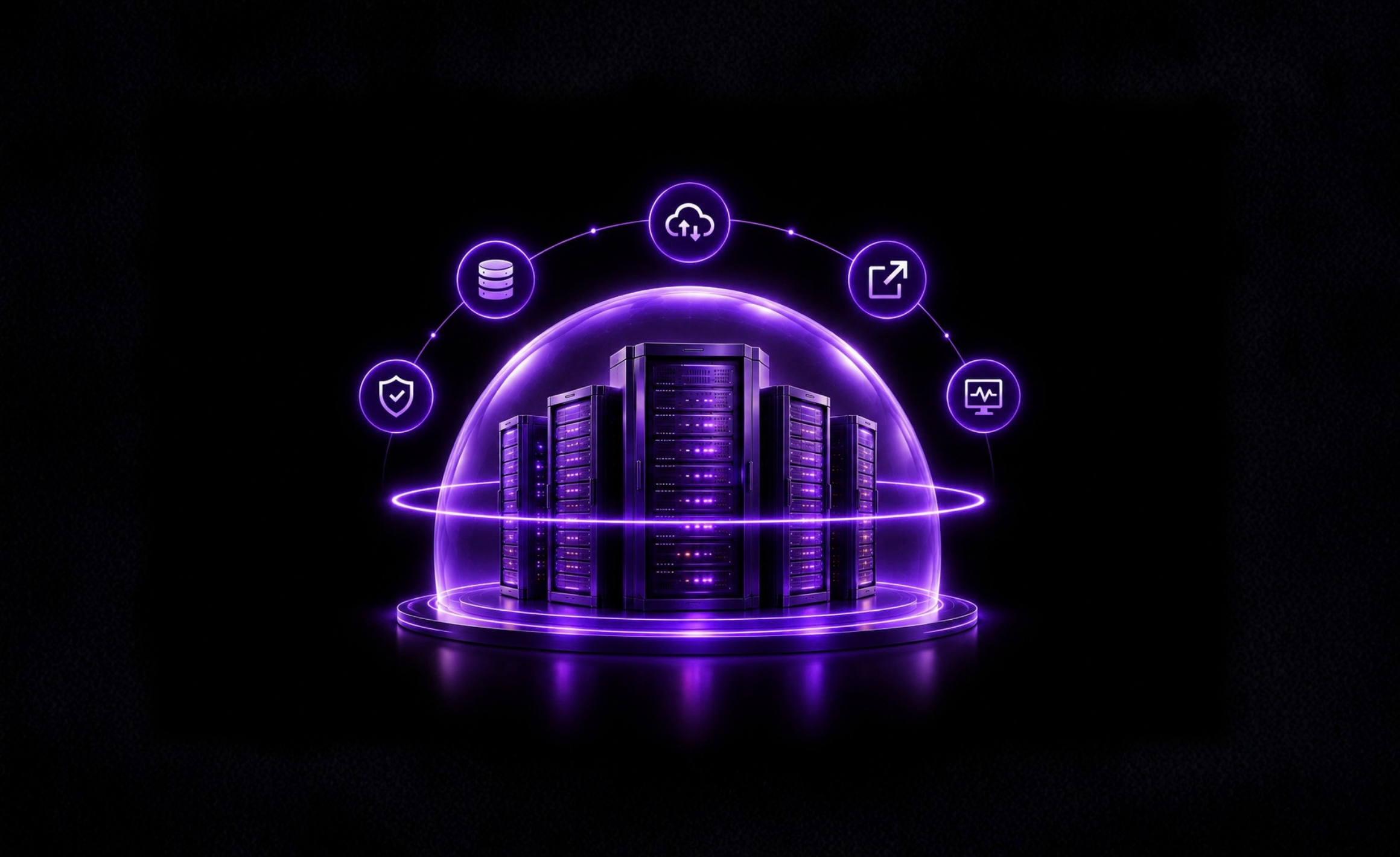
For modern enterprises, IT infrastructure is more than the technology that keeps applications running. It supports business operations, employee productivity, customer experiences, data and critical digital services.
When infrastructure is reliable and resilient, businesses can operate with greater confidence. When it becomes unstable, difficult to scale or vulnerable to disruption, the impact can quickly extend beyond IT.
That is why infrastructure resilience has become an important business priority.
Why Infrastructure Resilience Matters
A resilient IT infrastructure is designed to maintain critical services, absorb disruptions and recover effectively when something goes wrong.
Disruptions can result from hardware failures, network issues, capacity constraints, power outages, configuration errors or unexpected increases in demand. While every disruption cannot be prevented, organisations can reduce its impact by building infrastructure with resilience in mind.
The objective is not simply to prevent downtime. It is to create an IT environment that can maintain business continuity, adapt to changing requirements and support future growth.
Availability Is the Foundation of Reliable Operations
Business applications are only as dependable as the infrastructure supporting them.
High availability helps ensure that critical systems and services remain accessible when users and customers need them. Achieving this requires organisations to consider compute, storage, networking, connectivity and the dependencies between critical systems.
A resilient architecture reduces single points of failure and provides mechanisms that help services continue operating when individual components experience problems.
Redundancy Reduces the Impact of Failure
Infrastructure components can fail. What matters is how the environment responds when they do.
Redundancy helps reduce dependency on a single device, connection or resource. Redundant servers, network paths, storage and power systems can help maintain operations when individual components become unavailable.
However, redundancy should be aligned with business requirements. The right approach depends on workload criticality, recovery requirements and the potential impact of downtime.
Scalability Keeps Infrastructure Ready for Growth
Infrastructure that meets today's requirements may not be sufficient tomorrow.
Business growth can bring more users, higher transaction volumes, larger datasets and new digital workloads. If infrastructure cannot scale efficiently, increased demand can create performance and availability challenges.
Scalable infrastructure allows organisations to increase capacity as requirements change without repeatedly redesigning the entire environment.
This makes scalability an important part of infrastructure resilience and helps enterprises support growth without introducing unnecessary operational complexity.
Monitoring Enables Proactive Management
Infrastructure resilience also depends on visibility into what is happening across the environment.
Effective infrastructure monitoring can help IT teams track availability, performance, capacity and potential issues across critical infrastructure components. This allows teams to identify abnormal behaviour and address potential problems before they become larger operational issues.
Monitoring should go beyond simply checking whether systems are online. It should help teams identify performance degradation, capacity concerns and issues that could affect business operations.
Proactive Management Strengthens Resilience
Resilience cannot depend on reactive troubleshooting alone.
Proactive IT infrastructure management involves regularly reviewing performance, capacity, configurations, dependencies and potential points of failure. It also means maintaining systems, addressing known weaknesses and planning infrastructure changes before they become urgent.
This approach helps IT teams move from simply responding to incidents towards managing the environment strategically.
Infrastructure Resilience Supports Business Continuity
Business continuity depends heavily on technology continuity.
Organisations should understand which workloads are critical, how infrastructure components and applications depend on one another, and what happens when systems or connectivity become unavailable.
Resilience and recovery mechanisms shouldbe aligned with these requirements so that an infrastructure disruption doesnot automatically become a business disruption.
Building a Foundation for Future Growth
Infrastructure resilience is not about creating the most complex technology environment. It is about creating an environment that is reliable, scalable, observable and prepared for disruption.
Enterprises should continually ask:
These questions can help organisations identify where infrastructure improvements can deliver the greatest business value.
Conclusion: Resilience Is a Business Capability
A strong IT foundation gives enterprises more than operational stability. It creates the confidence to scale, modernise and introduce new digital capabilities without being constantly constrained by infrastructure limitations.
Reliable infrastructure keeps the business running. Resilient infrastructure helps the business keep moving forward.
For modern enterprises, building that resilience means treating IT infrastructure not simply as a technology requirement, but as a strategic foundation for business continuity, operational performance and future growth.