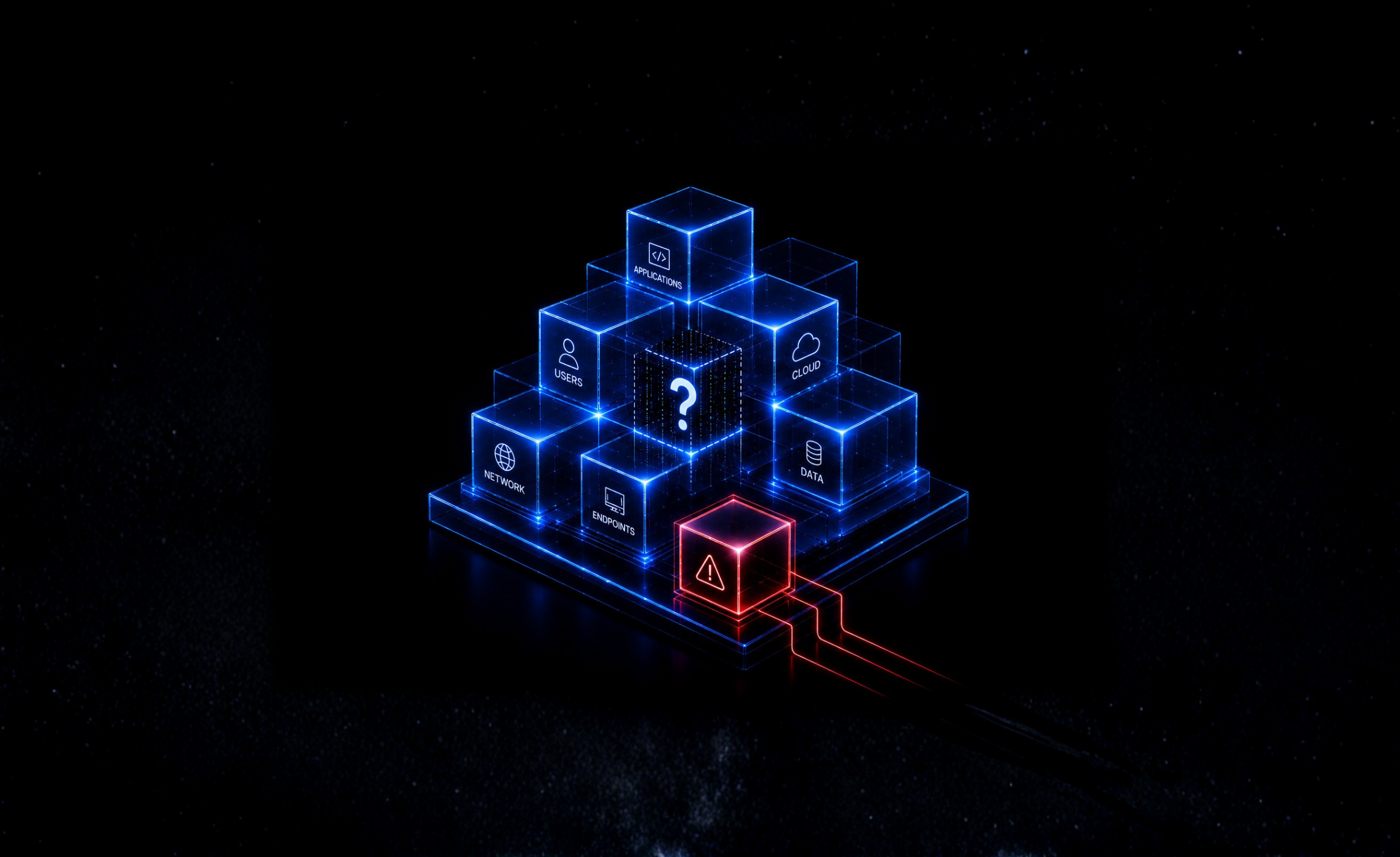
Modern IT environments have become easier to deploy—and harder to understand.
A typical enterprise may now run workloads across data centres, private clouds, public clouds, SaaS
platforms, remote endpoints and multiple network environments. Each layer generates data, alerts and
operational signals.
The problem is no longer a lack of information.
The problem is seeing the right information together.
When infrastructure, applications, networks, endpoints and cloud environments are monitored through
disconnected tools, IT teams can end up with thousands of signals but limited understanding of what
actually matters.
That is the enterprise visibility gap.
More Data Does Not Automatically Mean More Visibility
Modern infrastructure produces enormous amounts of telemetry.
Servers generate performance metrics. Applications generate logs. Networks generate traffic data.
Security platforms generate alerts. Cloud platforms generate usage and cost information.
Individually, these signals are useful.
The challenge comes when they remain isolated.
An application slowdown may actually be caused by a network issue. A sudden cloud performance
problem may originate from an infrastructure configuration. A security alert may be connected to an
endpoint issue that another team is investigating separately.
Without correlation, teams see events.
They don't necessarily see the incident behind the events.
Tool Sprawl Creates Operational Blind Spots
Adding another monitoring platform can appear to solve a visibility problem.
But if every platform creates another dashboard, another alert queue and another workflow, complexity
can increase instead of decrease.
IT teams may find themselves switching between infrastructure monitoring, application monitoring,
network monitoring, cloud dashboards, endpoint platforms, security tools and service management
systems.
The result is a fragmented operational picture.
The organisation may technically be monitoring everything while operationally understanding very little.
Visibility Needs Context
The value of monitoring isn't simply detecting that something changed.
The real value is understanding what changed, why it changed, what it affects, who owns it, how urgent
it is and what should happen next.
This is where unified IT operations and AIOps become increasingly important.
Instead of treating every alert as an isolated event, intelligent operations can correlate signals across
infrastructure, applications and services to identify patterns and prioritise issues.
That allows teams to focus less on individual alerts and more on business-impacting incidents.
The NOC Is Changing
Traditional NOC operations often revolve around monitoring screens and responding to alerts.
But modern environments require more than watching dashboards.
A modern NOC needs to understand relationships across systems.
For example, if an application becomes unavailable, the NOC should be able to determine whether the
underlying cause is infrastructure capacity, network performance, a cloud dependency, an application
component or another related issue.
That shift is from alert monitoring to operational intelligence.
Visibility Without Ownership Is Still a Problem
Seeing an issue is only the first step.
Someone needs to own it.
When monitoring tools are fragmented, ownership can become fragmented too. One team sees the
infrastructure alert. Another sees the application problem. A third sees the network event.
Everyone has part of the picture.
Nobody necessarily owns the complete incident.
Effective unified IT operations therefore require three things:
Visibility ® Ownership ® Action
Visibility identifies what is happening.
Ownership establishes who is responsible.
Action resolves the underlying issue.
What Enterprises Should Actually Measure
Instead of asking how many monitoring tools an organisation has, IT leaders should ask:
How quickly can we identify the root cause of an incident?
How many alerts require manual investigation?
How often do different teams investigate the same issue?
Can we correlate infrastructure and application events?
Can we identify business impact?
How quickly can incidents be resolved?
Can we identify recurring failure patterns?
These questions measure operational visibility—not simply monitoring coverage.
Closing the Visibility Gap
Modern IT doesn't necessarily need more dashboards.
It needs a clearer operational picture.
That means bringing together relevant telemetry, correlating events, establishing ownership and
enabling faster action.
A truly visible IT environment is not one where every system produces an alert.
It is one where teams can quickly understand what is happening, why it matters and what needs to
happen next.
Because in modern enterprise IT, the biggest visibility problem isn't that organisations can't see
anything.
It's that they can see too much—and still miss what matters.