Cyberattacks rarely succeed because organizations lack security tools. They succeed because organizations overestimate how much of their IT environment they can actually see. Discover why continuous endpoint visibility has become the foundation of cyber resilience and why knowing what you're protecting is the first step toward preventing the next attack.
Storms Don't Create Weaknesses. They Expose Them.
Every monsoon reminds us of an important lesson: storms don't create structural weaknesses they reveal the ones that already existed.
Cyberattacks work the same way.
The next breach is unlikely to happen because your organization didn't invest in cybersecurity. It is more likely to happen because an attacker discovers an endpoint your security team didn't know existed or couldn't continuously monitor.
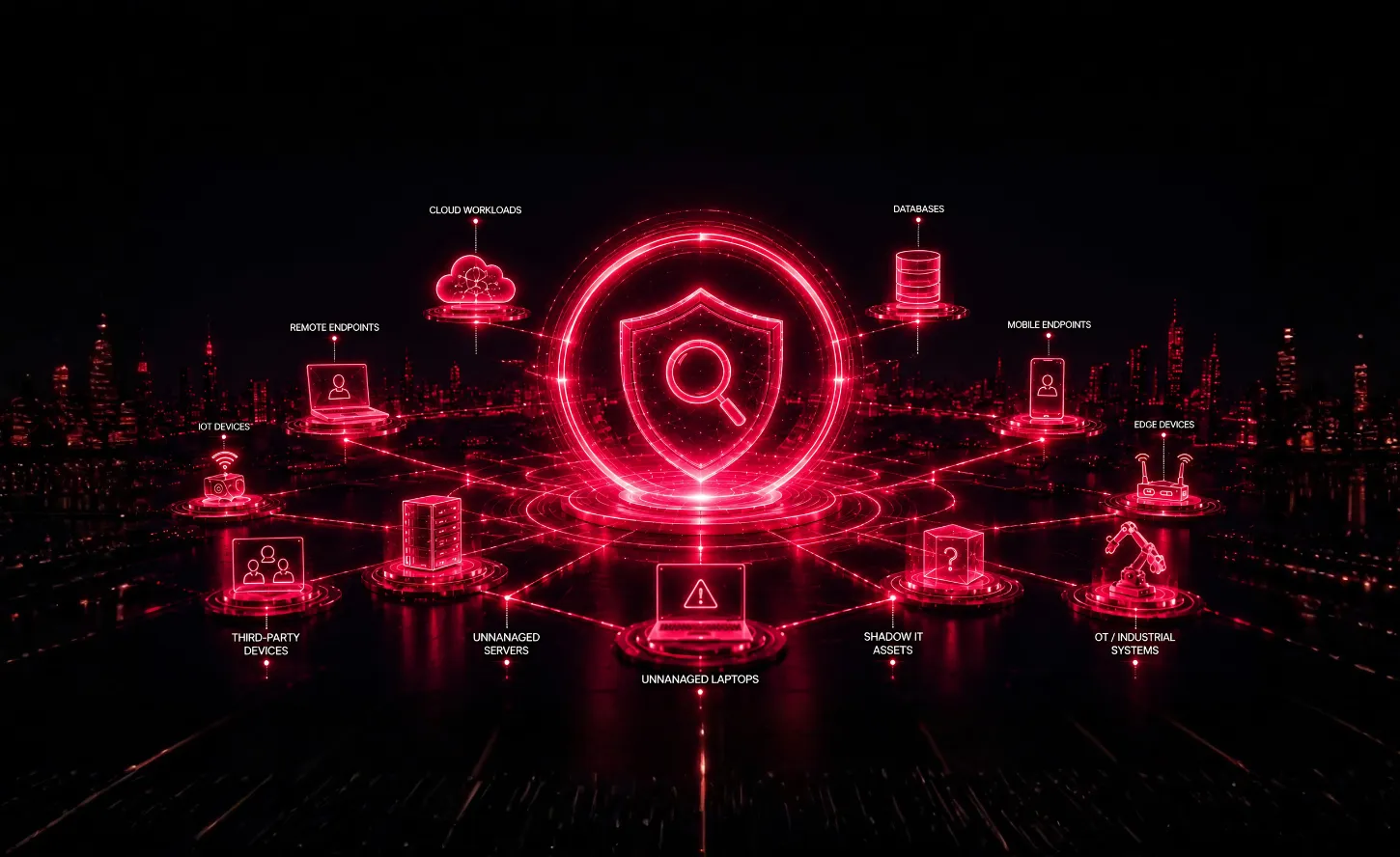
A forgotten laptop with VPN access. Anunmanaged server awaiting decommissioning. A contractor's device with outdatedpermissions. A cloud workload that has fallen outside routine monitoring.
These aren't rare exceptions. They're the hidden risks that quietly expand an organization's attack surface .
The real question for business leaders is no longer "Do we have endpoint security?"
It's "Do we know everything we're responsible for protecting?"
That question has become one of the most important measures of cyber resilience.
The Biggest Visibility Challenge Isn't Technology It's False Confidence
Many organizations believe they have complete visibility because they have invested in endpoint protection, firewalls, Security Operations Centers (SOC), Extended Detection and Response (XDR) ,or ZeroTrust architectures.
Those investments are essential.
But they all rely on one assumption:
Your organization knows every asset connected to its environment.
In reality, today's hybrid IT environments are constantly changing. Remote work ,cloudadoption ,IoTdevices ,operational technology (OT), mergers, acquisitions, and third-party access continuously introduce new endpoints. Without continuous asset discovery and endpoint inventory ,visibility gradually declines even while security investments continue to grow.
This creates what many organizations failto recognize: a visibility gap.
It isn't the absence of security controlsthat creates risk.
It's the false confidence that everything important is already visible.
Every Invisible Endpoint Expands Business Risk
Poor endpoint visibility is often treatedas a technical issue.
It isn't.
It's a business governance issue.
Every unmanaged device, shadow ITapplication, or forgotten endpoint introduces uncertainty into theorganization. Security teams cannot assess the risk of assets they cannot see.Compliance teams cannot verify controls around unknown devices. Business leaderscannot accurately understand their organization's security posture if parts of the environment remain invisible.
The consequences extend far beyondcybersecurity.
Limited visibility can increase operationaldowntime, delay incidentresponse, complicate regulatory audits, affectcyber insurance readiness, and disrupt business continuity during a security event.
Simply put, organizations cannot managerisks they cannot identify.
The Visibility Confidence Check
Before investing in another cybersecurityplatform, every CIO, CTO, and CISO should ask five questions:
1. Can we identify every endpointconnected to our environment today?
2. How quickly can we detectunauthorized or unmanaged devices?
3. Do we maintain continuous visibilityacross on-premises infrastructure, cloud environments, and remote endpoints?
4. Can security teams automaticallyidentify vulnerable or misconfigured assets before attackers do?
5. Is our endpoint inventorycontinuously updated, or does it rely on manual processes and periodic audits?
If answering any of these questions dependson assumptions rather than evidence, your organization doesn't have atechnology problem.
It has a visibility problem.
Visibility Is the Foundation of Every Security Investment
Organizations continue investing inadvanced cybersecurity capabilities, including Zero Trust, Identity andAccess Management (IAM) , XDR, Security Operations Centers, Backup andDisaster Recovery , cloud security , and exposure management.
These technologies strengthen security.
But none of them can protect assets theydon't know exist.
Visibility is not another layer ofcybersecurity.
It is the foundation that enables everyother security investment to perform as intended.
When organizations achieve continuousendpoint visibility, they reduce the attack surface, strengthen threatdetection, improve compliance, accelerate incident response, and make moreinformed, risk-based decisions.
Security becomes proactive instead ofreactive.
Resilience becomes measurable instead ofaspirational.
From Visibility to Resilience: A Better Way to Think AboutCybersecurity
High-performing organizations increasinglyview cybersecurity through four connected stages:
Visibility –Discover every endpoint, workload, and connected asset.
Context –Understand ownership, business criticality, vulnerabilities, and exposure.
Control –Prioritize remediation, automate security policies, and reduce unnecessaryrisk.
Resilience –Detect faster, recover sooner, and maintain business continuity when disruptionoccurs.
Organizations that skip the first stageoften struggle with every stage that follows.
You cannot secure what you cannot identify.
You cannot recover what you didn't knowexisted.
And you cannot build resilience onincomplete visibility.
Preparing Before the Next Storm
Weather forecasts don't stop storms.
They provide the visibility needed toprepare before disruption occurs.
Cybersecurity demands the same mindset.
Organizations that continuously understandtheir endpoint landscape are better positioned to identify hidden assets,reduce exposure, strengthen security posture, and respond before isolatedvulnerabilities become enterprise-wide incidents.
Before your next cybersecurity investment,ask one question:
If an attacker entered your environmenttoday, would they discover an endpoint your security team doesn't know exists?
If the answer is "possibly,"the next priority isn't another security tool.
It's better visibility.
At Orient Technologies, we helporganizations strengthen cyber resilience by improving continuous endpointvisibility across hybrid IT environments. By enabling enterprises to discoverhidden assets, reduce attack surfaces, and gain actionable security insights,we help businesses prepare for disruption before it impacts operations.
Because the strongest defence doesn't beginwhen an attack is detected.
It begins with knowingexactly what you're protecting