A business application slows down during peak hours. Employees report delays, transactions take longer, and support tickets begin to rise. Yet the infrastructure dashboard shows no obvious failure. Servers are running, the network appears available, and the application remains online.
So, where is the problem?
In complex enterprise environments, answering this question can require several teams to investigate separate systems before they can connect the evidence. The challenge is not always a lack of monitoring data. It is the difficulty of understanding how individual components interact to support a business service.
This is the enterprise visibility gap: the distance between knowing the condition of individual systems and understanding how their relationships affect overall service performance.
Why Healthy Systems Can Still Deliver Poor Performance
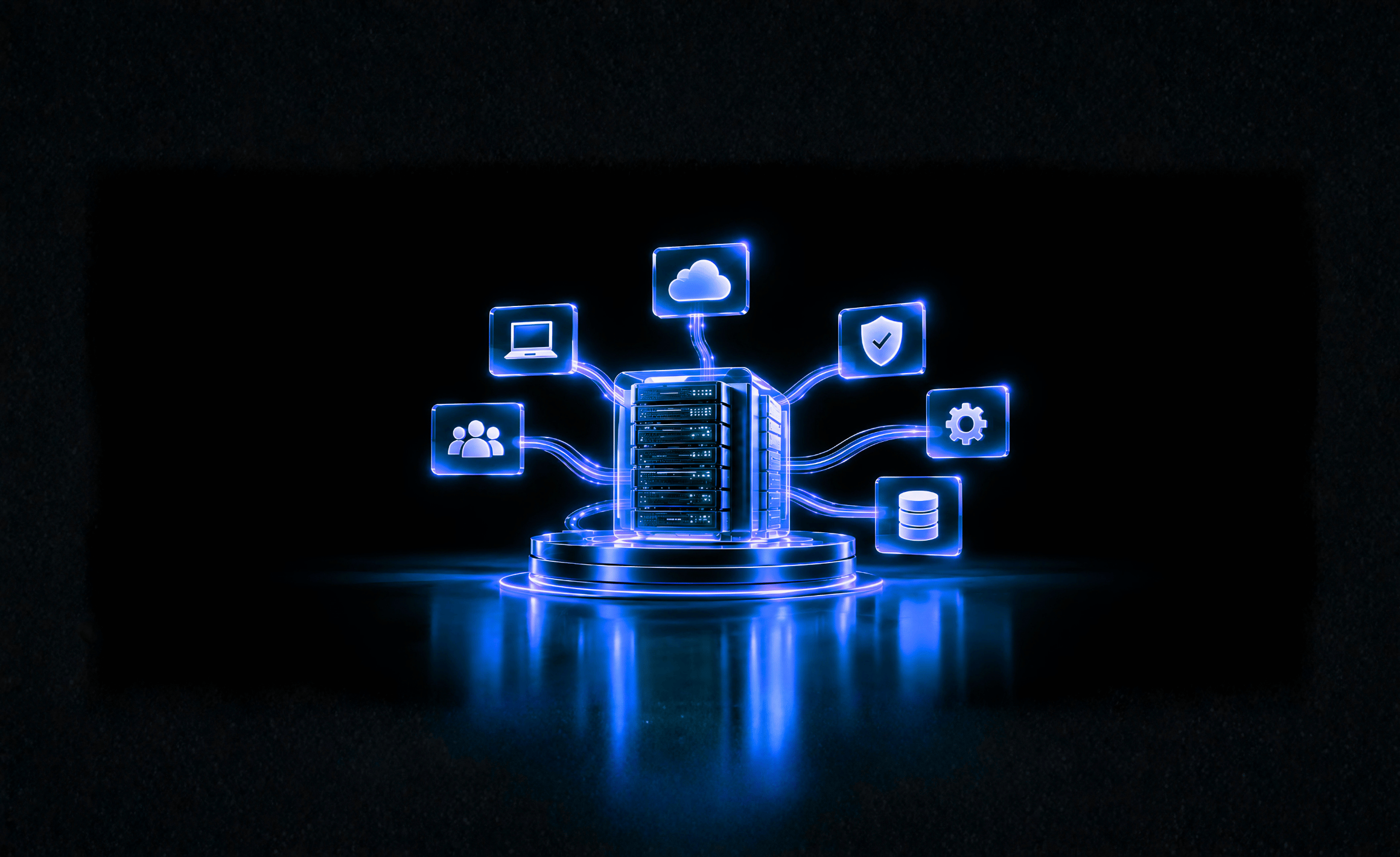
Modern business applications depend on interconnected infrastructure, databases, networks, identity services, and external APIs. A service can experience performance issues even when its individual components appear operational.
For example, a server may have sufficient processing capacity while requests wait for database connections. Network devices may remain available while latency affects communication between specific services. An application may report slow transactions because a downstream dependency is responding inconsistently.
These situations are difficult to diagnose when each team sees only part of the environment.
Infrastructure teams monitor resource utilisation and capacity. Application teams investigate response times and errors. Network teams examine latency, connectivity, and traffic patterns. Each perspective is valuable, but none necessarily explains the complete user experience.
The problem becomes more difficult when service dependencies are poorly documented, telemetry is spread across different platforms, and teams lack a shared process for investigating incidents.
Why More Monitoring Tools May Not Close the Gap
Adding monitoring tools can improve coverage, but coverage alone does not provide operational context.
Coverage answers whether a component is being monitored. Visibility helps teams understand how that component behaves, which services depend on it, and whether its condition is relevant to an incident.
When information is fragmented, teams may spend valuable investigation time comparing timestamps, requesting logs, and determining whether alerts from different systems describe the same underlying problem.
The goal of IT infrastructure monitoring should therefore extend beyond collecting metrics. Teams need to connect relevant infrastructure, application, and network signals to the business services they support.
This also means prioritising visibility according to business impact. An issue affecting a critical transaction platform may deserve attention before an isolated alert on a non-critical system, even if the latter appears more severe on a technical dashboard.
How Connected Signals Help Narrow an Investigation
Consider an organisation whose internal business application becomes slower during peak usage.
The application team checks transaction performance but finds no clear increase in application errors. The infrastructure team sees no obvious server capacity constraints. The network team confirms that general connectivity remains stable.
Examining each system independently has not explained the slowdown.
The teams then compare evidence across the environment:
• Application performance: Transaction response times have increased.
• Dependency behaviour: Database connection waits have risen during the same period.
• Network conditions: Network latency remains relatively stable.
• Investigation priority: The team examines database contention, query performance, connection pools, and recent configuration changes.
The findings narrow the investigation towards the database interaction rather than a general infrastructure or network failure.
However, correlated signals do not prove causation. The team must validate the suspected cause against additional evidence before making changes.
This is where connected visibility becomes useful: it helps teams move from investigating every possible component to testing the explanations best supported by the evidence.
The scenario is illustrative, not a documented customer incident. Actual findings depend on the architecture, instrumentation, and telemetry available.
Monitoring and Observability: Complementary Capabilities
Monitoring helps teams track system health, detect deviations from expected behaviour, and generate alerts against defined conditions.
Observability supports investigation by helping teams interpret metrics, logs, traces, and contextual relationships to understand system behaviour, including problems that do not match familiar failure patterns.
Neither capability guarantees an immediate diagnosis. Their effectiveness depends on reliable telemetry, appropriate instrumentation, meaningful service context, and teams that can interpret and act on the evidence.
A monitoring platform may generate alerts without revealing which business service is affected. An observability platform may provide extensive telemetry while leaving gaps if critical dependencies are not instrumented.
The objective is not simply to adopt more technology. It is to make existing and new operational data useful for diagnosing problems and deciding what to investigate next.
Five Ways to Improve Enterprise Visibility
Organisations can begin addressing visibility gaps without automatically replacing their existing tools.
1. Map critical service dependencies. Identify the applications, databases, infrastructure, and external services supporting essential business processes. Keep these relationships updated as systems change.
2. Review recurring incidents. Identify cases where diagnosis was delayed because teams lacked relevant logs, metrics, traces, or dependency information.
3. Connect the right signals. Prioritise telemetry that helps explain the performance of critical services rather than collecting data without a defined operational purpose.
4. Establish shared incident ownership. Define how infrastructure, application, network, and service teams collaborate, share evidence, and escalate investigations.
5. Measure investigation outcomes. Track mean time to detect (MTTD), mean time to resolve (MTTR), recurring incidents, and service-level objective performance. Interpret these measures alongside incident complexity and business impact.
A useful starting question for IT leaders is: When a critical business service slows down, can the teams involved quickly identify its dependencies, compare relevant signals, and determine the next investigation step?
If the answer is no, the visibility gap deserves attention.
Build Visibility Around the Services That Matter
Reliable enterprise operations require more than confirmation that individual systems are online. Teams need to understand how those systems interact, where dependencies introduce risk, and which business services may be affected.
IT infrastructure monitoring provides essential performance and health information. Observability supports deeper investigation, while unified IT operations can help connect information, ownership, and incident-response processes.
When these capabilities are supported by reliable telemetry and clear operational practices, IT teams have a stronger basis for identifying problems, prioritising investigations, and reducing avoidable disruption.
The measure of visibility is not how many dashboards an organisation has. It is how effectively its teams can turn technical evidence into decisions that protect the services the business depends on.